
Vapor barrier installation in Concord costs $1,500–$4,000: reinforced 12–20 mil liner, sealed at every seam and pier. For dry crawls whose only moisture source is the ground itself, it's the honest scope, and it doubles as stage one of any future closed-crawl upgrade.
Why ground vapor matters, what separates a sealed barrier from a plastic sheet, and which crawls this tier genuinely fits.
The moisture source nobody sees moving
Red clay under a house never stops releasing vapor: surface-dry is not vapor-dry. That continuous load rises into joists and subfloor, feeds summer condensation, and sets the humidity baseline your HVAC fights upstairs. Because it's the foundation-level source, the ground barrier is where every moisture strategy starts, from minimal to the full closed-crawl system: NC's own crawl research treats the sealed ground layer as non-negotiable.
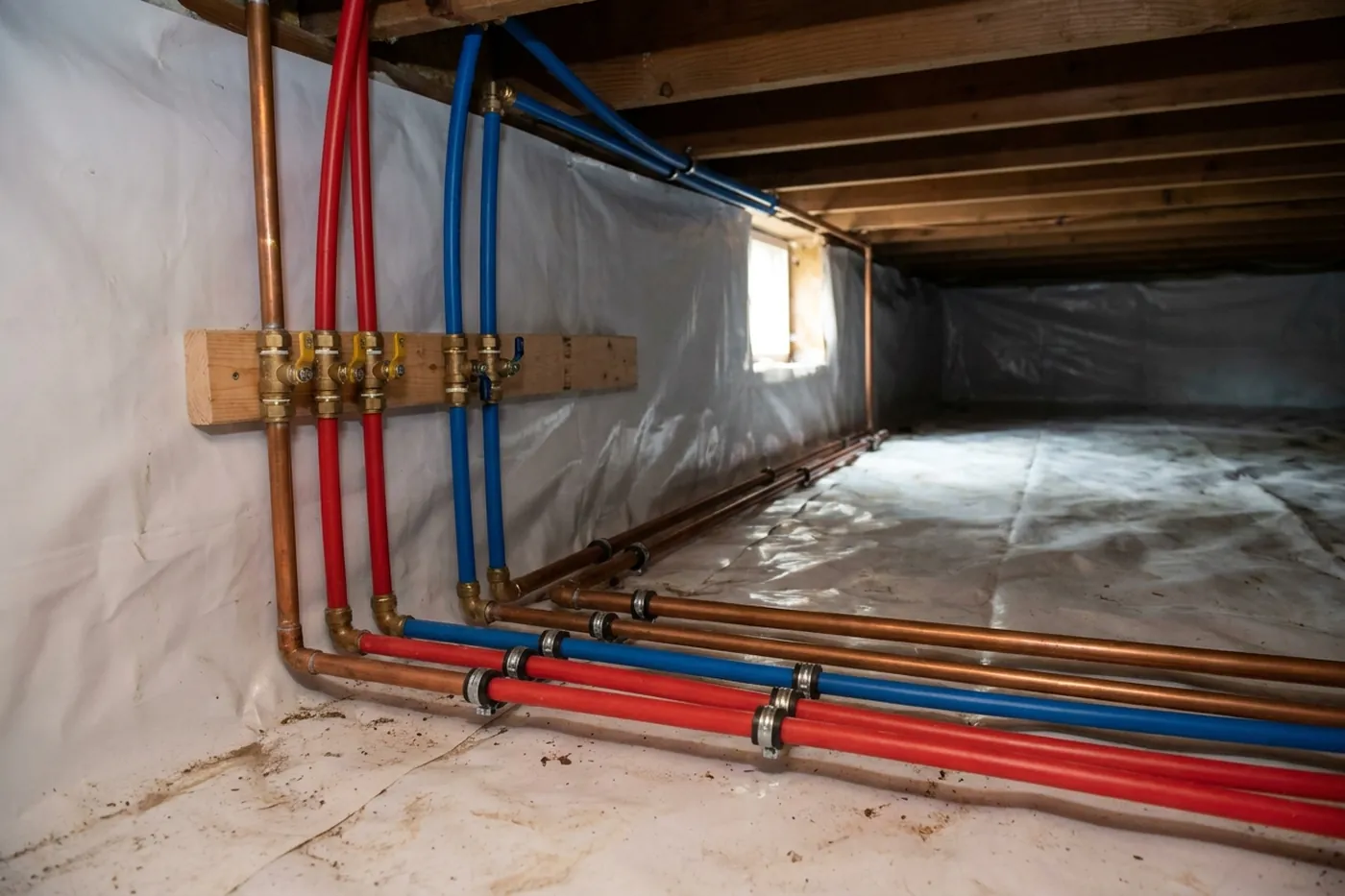
Installed like a system, not spread like a tarp
- Ground prep: debris and sharp rubble cleared so nothing punctures from below
- Reinforced 12–20 mil liner that survives service visits for decades
- Generous overlaps, taped full-length: a vapor seal, not a loose lay
- Mechanical fastening at walls and every pier so the liner never migrates
- Sealed penetrations at plumbing and supports
- Photo documentation of the finished layer before the crew leaves
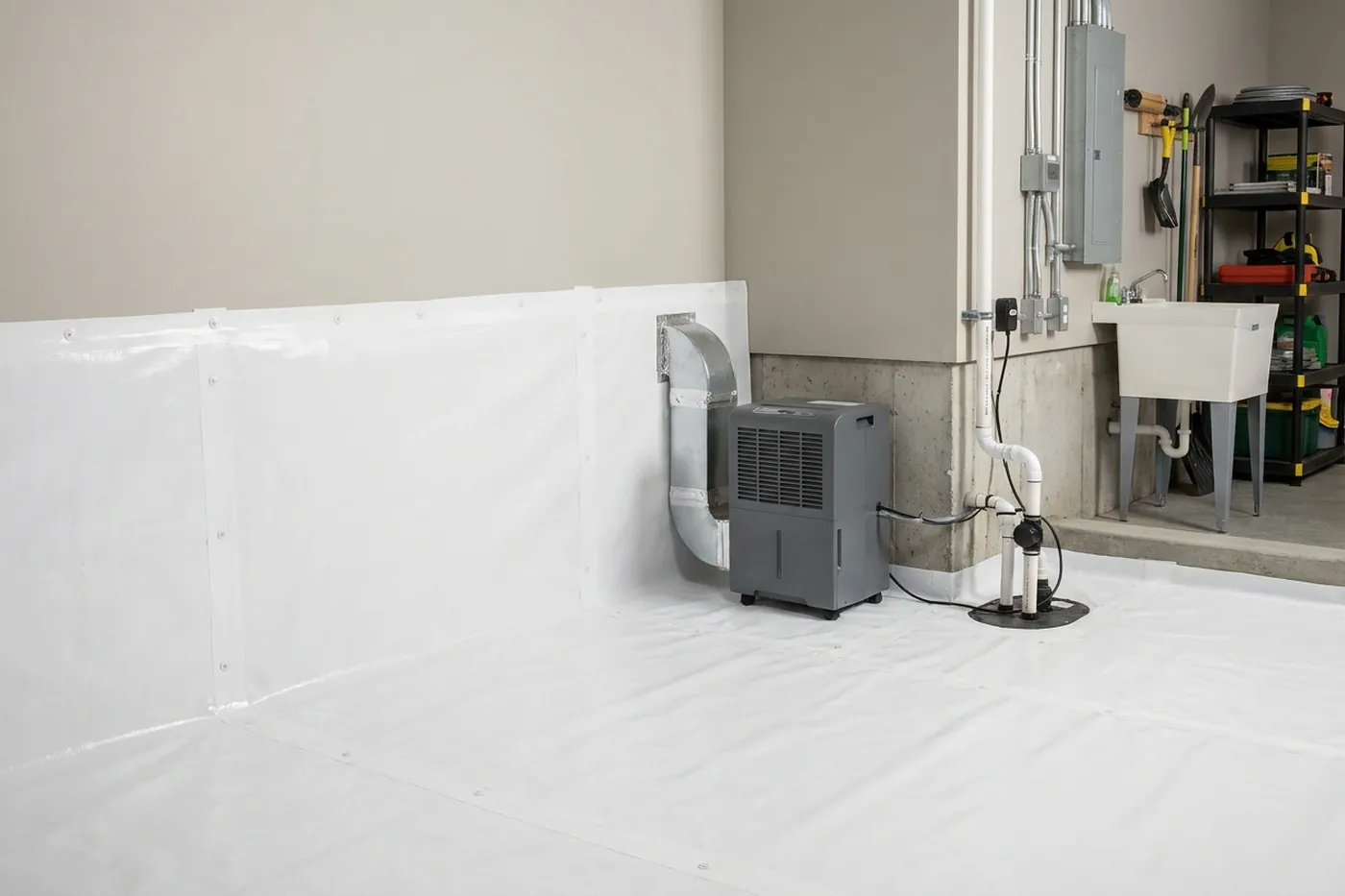
Which crawls should stop here?
Crawls with no water history, moderate summer readings, and sound framing (most common in the newer Harrisburg and Locust-corridor subdivisions) often need exactly this layer and nothing more. The inspection takes the readings; if your crawl needs more, you should see why in the photos before you see it in a number.
Which barrier does this crawl space need?
The state's own research is specific about this: a barrier is one component of a system, and on its own it underperforms what people expect of it.
| Option | What it does | What this market demands of it |
|---|---|---|
| Light poly, ground only | Basic evaporation control, loosely laid | Loosely laid poly was the baseline the NC studies improved on |
| Class I barrier, sealed | Seams and edges sealed to the walls and piers | What the NC code contemplates: Class I, sealed, with a drying mechanism |
| Full encapsulation | Barrier up the walls, sealed, with humidity control | The configuration the field studies actually measured as drier |
| Barrier over wet ground | A liner laid on ground that still takes water | On clay that holds water, a liner without drainage traps the problem |
The distinction that matters here is sealed versus laid. The research compared systems, not sheets of plastic.
Frequently asked questions
What does a vapor barrier cost installed?
$1,500-$4,000 for reinforced 12-20 mil liner across most Concord-area crawls, sealed at seams and piers. It's also the ground layer of full crawl space encapsulation, so nothing is wasted if you upgrade later.
My crawl has old plastic. Doesn't that count?
Rarely. Builder-era 6-mil sheeting tears, gaps at seams, and stops well short of piers and walls. A barrier only works as a continuous sealed layer; that's the difference you're paying for.
How much moisture does bare ground really release?
Uncovered soil under a house can evaporate gallons of water per day into the crawl, even when the surface looks dry. That vapor is the baseline load your floor system absorbs year-round.
Barrier now, full encapsulation later: does that work?
Perfectly, and it's a common Cabarrus path: the sealed ground layer goes in now, and vents, wall liner, and the dehumidifier can join it later without redoing anything.
Get a Concord crawl space inspection
Tell us what you're noticing (smells, humidity, floor bounce, a wet crawl) and we'll pass your request to one independent local specialist who serves Concord. They call you back to set up an inspection.