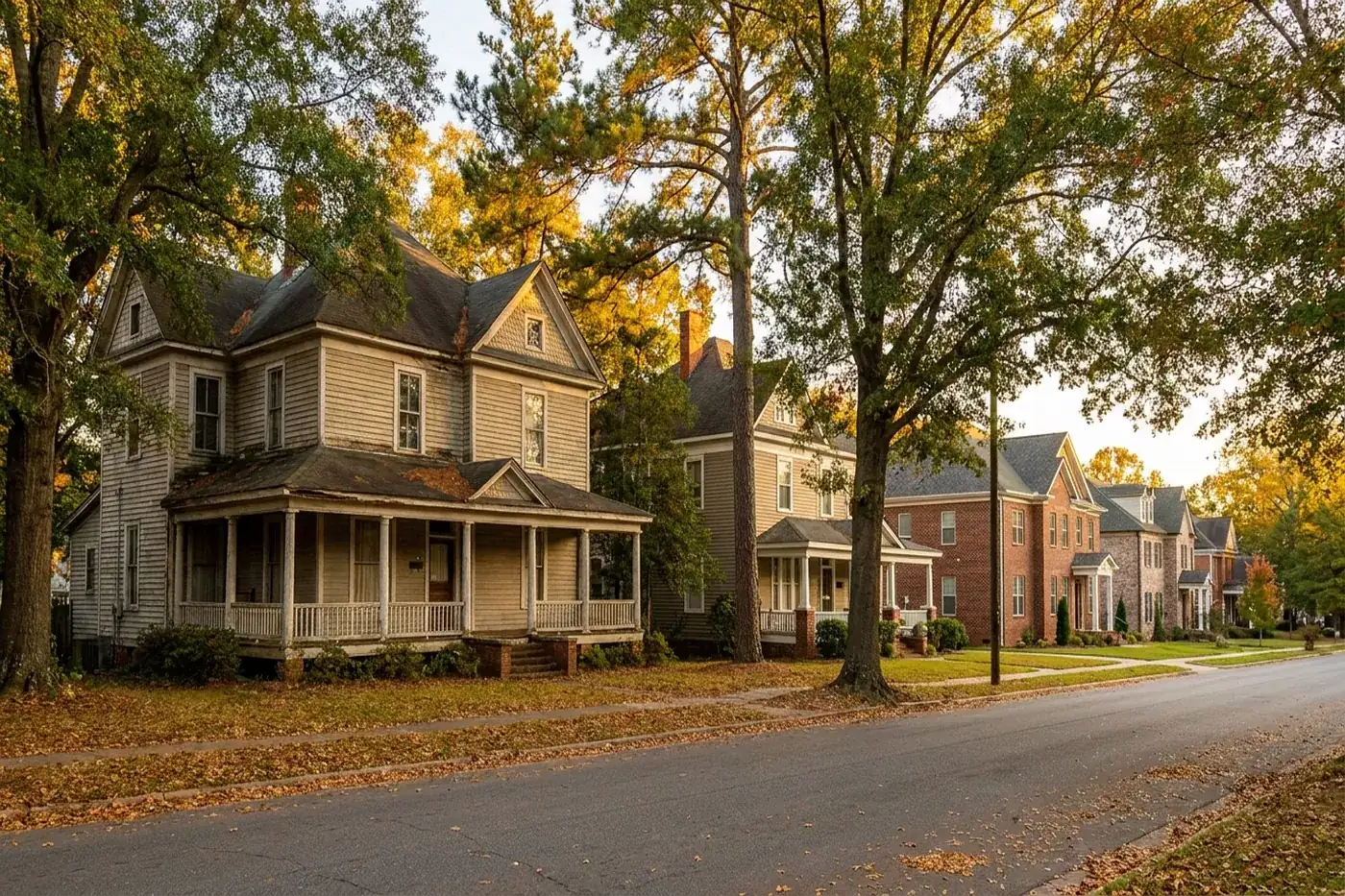
Sagging floor repair in Concord runs $1,500–$8,000 for most crawl space structural work: re-supporting settled brick piers under the older stock, reinforcing builder-grade spans under the newer, and replacing what rot claimed. Slow-draining Piedmont clay drives both versions.
Two housing stocks, two sag stories, and the repair in order.
Which Concord is your floor from?
This market’s housing history wrote two different floor systems. The mill villages and early-1900s streets around the old towns ride wood girders on brick piers — masonry that has negotiated with Cabarrus County’s slow-draining red clay for a century, settling as the clay softens under point loads, shedding mortar, walking its shims. The speculative-growth-era subdivisions ride newer framing on modern supports, but sized to code-minimum spans — adequate dry, and thin on margin once a vented Piedmont crawl’s humid season starts working the wood. Both arrive upstairs as the same complaints — bounce, slope, baseboard gaps, drifting doors — and the crawl-under tells them apart in minutes.
Reading the symptoms, by stock
| What you notice | Older stock usually means | Newer stock usually means |
|---|---|---|
| Slope toward one area | A pier settled into softened clay | A girder span sagging at its middle |
| Bounce mid-room | Girder deflecting between aged piers | Minimum-span joists at their limit |
| Gaps under baseboards | Field dropping as piers ease down | Field deflecting under humid-season load |
| Soft spots underfoot | Rot — past stiffness loss; replacement in either stock | |
| Seasonal door drift | Clay cycling — moisture control joins the scope | |
The repair, in the order that holds
Measurement first: the laser survey upstairs maps which spans dropped and how far; the crawl-under with a moisture meter says why — settled piers, aged masonry, thin spans, wet wood, or the improvised jacks a previous decade left. Then the carpentry and masonry: settled piers re-supported or rebuilt on footings sized for this clay, thin spans sistered or given engineered mid-supports, rot-claimed sections replaced.
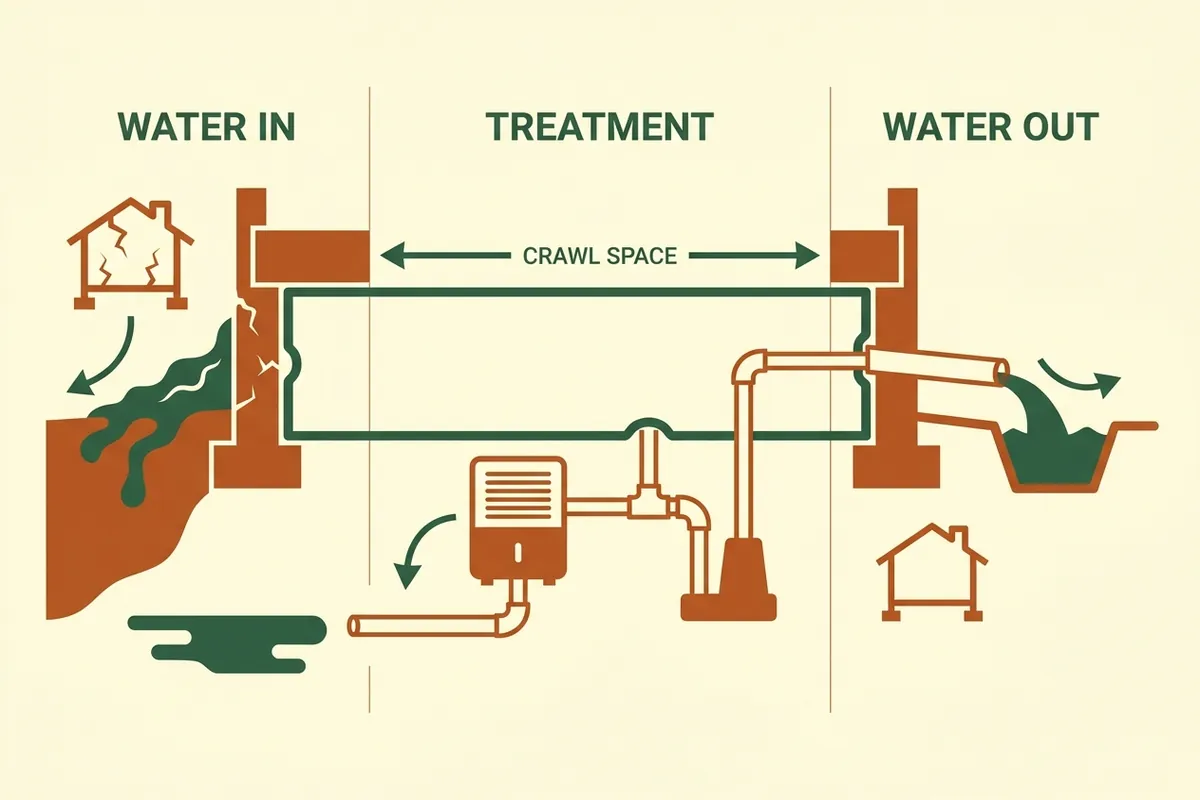
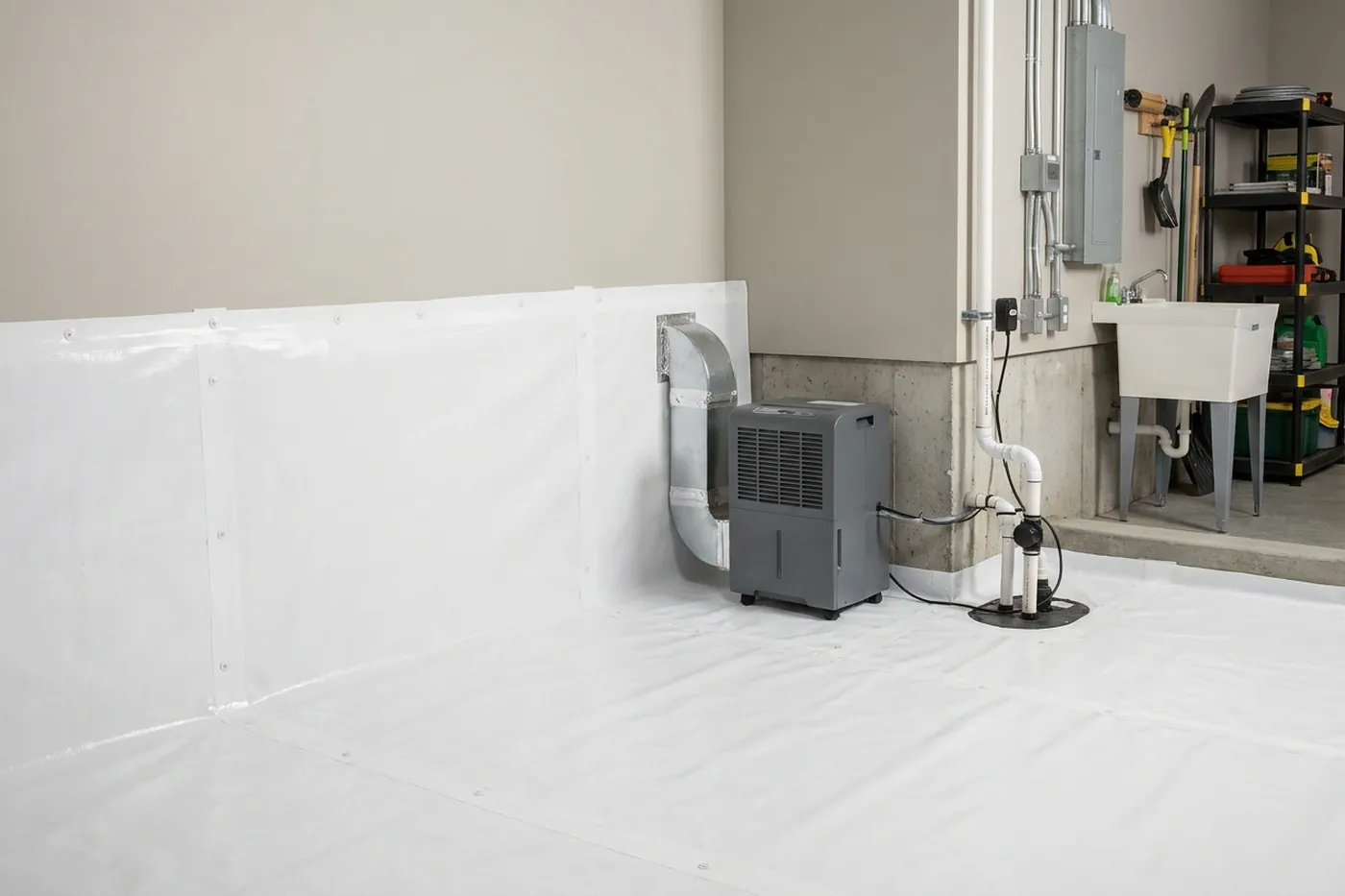
Then the moisture fix that makes it permanent — and here Concord argues from authority, because North Carolina is where closed-crawl-space practice was proven and the NC Residential Code carries its provisions: waterproofing and drainage where water arrives, a sealed vapor barrier on the ground, moisture control for the air, and full encapsulation as the endpoint the research supports. Broader context on the crawl space repair page; every price in the cost guide.
What to expect after the repair
A repaired floor returns to tolerance, not to new construction. Some deflection usually remains by design — forcing a century-old floor perfectly flat cracks the finishes above it — and the lift is staged slowly for that reason. Expect a few doors to need adjustment and a hairline crack or two as the frame relaxes into position; wait a season, then patch once. Afterward, protect the ground the repair sits on. Re-supported piers bear on footings sized for red clay that softens when it stays wet, so keep gutters clear and grade falling away, and look underneath each spring. In the state that proved closed crawl spaces work, a dry crawl is the maintenance plan.
Sagging floor questions, straight answers
Why do Concord floors over crawl spaces sag?
Depends which Concord you bought into. The mill-village and early-1900s stock rides brick piers that have negotiated with slow-draining red clay for a century — piers settle, mortar softens, shims walk. The speculative-growth-era stock has newer wood but builder-grade spans sized to the code minimum, and Piedmont crawl humidity takes the margin out of minimums.
What's actually wrong with old brick piers?
Usually the ground, sometimes the pier. Red clay that holds water softens under point loads, so piers ease downward — a quarter-inch here, a half there, and the girders above pick up the differences as slope. The masonry itself can also age: soft mortar, spalled brick. The crawl-under reads both, and repair is re-support, not nostalgia.
Is bounce in a newer house normal?
Common isn't the same as fine. Boom-era framing sized to minimum spans deflects noticeably even dry — add a vented crawl's humid season and the margin thins further. Some bounce is within tolerance; the laser survey and moisture readings say whether yours is living on the code line or past it. Numbers beat vibes on this question.
What does the repair actually involve?
Match the fix to the stock: re-supporting or rebuilding settled brick piers on proper footings for the old towns, sistering and adding engineered supports where minimum spans need help in the newer stock, replacing whatever rot has claimed in either. Then the moisture fix — this is the state that proved closed crawl spaces work, and dry framing keeps the repair.
What does sagging floor repair cost in Concord?
Most structural crawl space repairs run $1,500-$8,000 — pier work, joist and girder counts, and access set the number. The moisture correction that stops recurrence prices in the same written scope, per the closed-crawl practice NC's own research proved out. The crawl-under inspection with photos is free.
Get a free Concord crawl space inspection
Tell us what you're noticing — smells, humidity, floor bounce, a wet crawl — and we'll schedule an inspection with photos of what we find. We reply the same business day.